

How To Install Windows Operating System
Because installing a second operating system, and want to exist enlightened of the risks? Having Windows and Linux installed on your PC gives you the best of both worlds. Simply information technology isn't always smoothen sailing. Dual booting tin lead to problems, some of which are difficult to foresee.
Is dual booting safe? Does it bear upon functioning? Here are ten risks of dual booting that y'all should be aware of before installing a second operating system.
1. Dual Booting Is Safe, Simply Massively Reduces Disk Space
Allow's become this out of the way showtime: dual booting, if done correct, is safe. Your computer won't self-destruct, the CPU won't melt, and the DVD bulldoze won't start flinging discs across the room.
However, it does have one key shortcoming: your disk space will exist markedly reduced.
For case, if you are running Windows 10, it uses around 11GB of SSD or HDD infinite on a 64-chip system. In improver to this is the infinite used for installing software, and the swap file and page file.
Dual booting with, say, a standard installation of Ubuntu uses at least 5GB of infinite. It then requires a further ten-15GB minimum for performance (installing apps, swap data, processing updates, etc.).
If you programme to use both Windows and Linux partitions regularly, you could end up using as much storage infinite on each. Consequently, you will hit your computer's physical storage limit pretty quickly.
2. Adventitious Overwriting of Data/OS
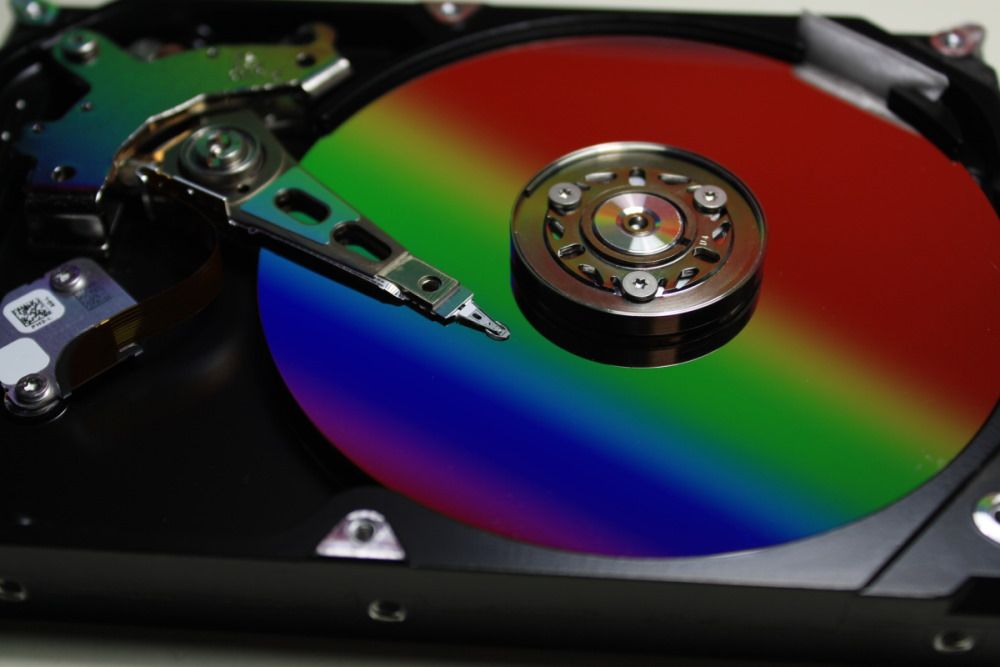
If this isn't the most of import, it's certainly the risk that can scupper you before you even get started. Afterward all, overwriting your existing data---or even the chief operating system---is going to lead to bug. Sure, y'all can use recovery tools, but the chances of recovering all your data are minimal.
Fortunately, most operating system installation wizards can detect primary partitions. This ways that if you're installing Windows alongside a Linux distribution, the wizard should highlight the existing sectionalisation. You'll go a choice of what to do next. Linux operating systems, meanwhile, are similarly smart.
But accidents do happen, so accept intendance when installing. Make sure you install the new operating system onto the correct bulldoze and partition, without accidentally losing your data.
3. Dual Booting Can Hit Productivity
Running multiple operating systems on your PC is a great way to maximize productivity. Only sometimes information technology can be counterproductive. If you desire to dual boot Windows 10 and Ubuntu, it'south convenient to easily switch into that Os.
Only do you really need to? Making sure you have equivalent applications in Linux if you have switched from Windows is important. Similarly, you should ensure suitable options are available if switching the other way. Dual booting should really be for experiencing---and enjoying---the whole alternative operating arrangement surround.
Then again, you might not even demand to switch. Running Windows in a virtual machine on Linux is a bang-up solution.
Ultimately, it's of import to make sure you're using the best operating system for the job at hand.
4. Locked Partitions Can Cause Dual Boot Bug
Possibly one of the biggest pitfalls of dual booting is being unable to access your data. Most of the fourth dimension, this shouldn't be a problem. If you have organized things effectively, your vital personal files will be bachelor via whatever operating systems you're using.
This is possible using cloud storage, for instance, or using a HDD partition specifically for personal files.
However, issues can occur. If you're using Windows and the arrangement shuts downwards unexpectedly, any dedicated partition used for personal files will exist locked. This means that trying to access the drive from your Linux partition will fail. You'll see a message similar this:
Error mounting /dev/sda5 at /media/karma/information:
Command-line `mount -t "ntfs" -o "uhelper=udisks2,nodev,nosuid,uid=1000,gid=k,dmask=0077,fmask=0177"
"/dev/sda5" "/media/karma/data"' exited with non-naught exit status 14: The disk contains an unclean file system (0, 0).
Metadata kept in Windows cache, refused to mount. Failed to mountain '/dev/sda5':
Operation not permitted The NTFS partition is in an unsafe state.
Delight resume and shutdown Windows fully (no hibernation or fast restarting), or mount the volume read-only with the 'ro' mount option.
This is peradventure the most frustrating risk of dual booting.
Fortunately, it tin can be stock-still, but it might take a few minutes (depending on how quickly your Windows installation boots). Yous accept two options:
- Follow the instructions in the error and kick the device every bit read simply
- Reboot into Windows, and so initiate an ordered restart to the boot menu and switch back into Linux
With both fixes, the files should be available with full access again.
5. Viruses Can Affect Dual Booting Security
Linux-based operating systems are robust, they remain largely untroubled by viruses and other malware. While there are some exceptions, this is largely cheers to the relatively small userbase. The many Linux operating systems collectively command just a fraction of the operating organization market.
Clearly, scammers target Windows computers because it's more efficient for them to become results. However, many websites are attacked or even taken offline due to viruses and malware, and most spider web servers run on Linux.
If y'all're running a dual boot reckoner, therefore, the likelihood of malware affecting the Linux environment increases.
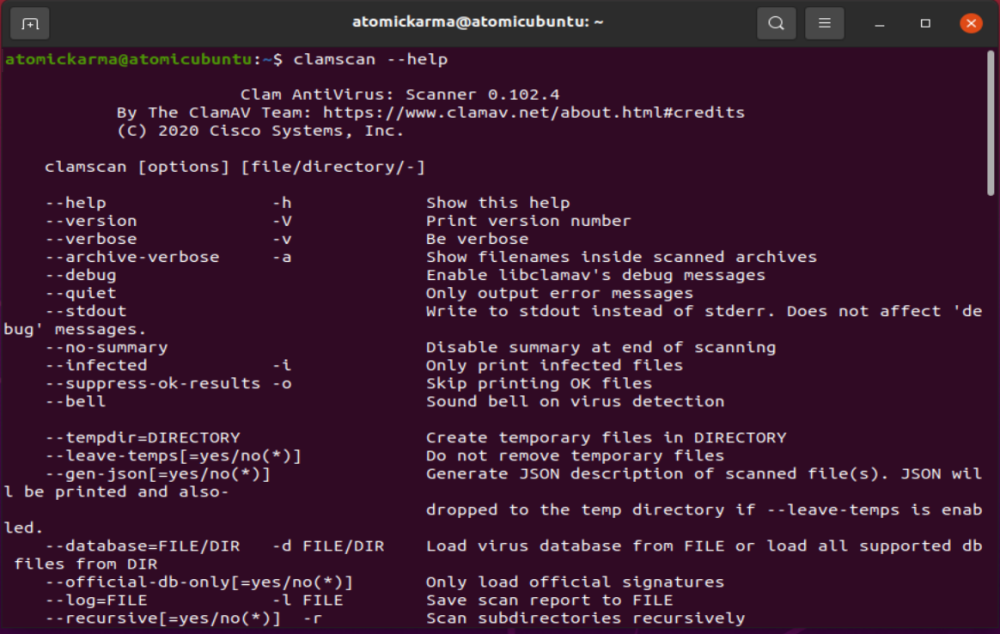
Every bit such, it is wise to maintain an internet security suite when running Windows. In your Linux operating organization, running a malware scanner similar ClamAV daily should too put your mind at remainder. Don't simply focus on the operating system when scanning for viruses; scan your personal data files too.
6. Driver Bugs Tin can Be Exposed When Dual Booting
A key danger of dual booting is seemingly random hardware issues occur. These are typically linked to Windows device drivers, however, and are becoming increasingly rare.
Perhaps the most common hardware event when dual booting comes in the shape of congenital-in wireless network cards. These switchable devices can end up being disabled in Windows, and therefore unable to initialize in Linux.
In some ways, a disabled Wi-Fi card recalls the bug with a locked partition discussed above.
The solution is to inquiry back up for the wireless card (or other device) before installing your operating systems. You should as well ensure the drivers are upwards to date on both operating systems. Also, have a moment to check the status of the device in your PC'south UEFI/BIOS.
vii. Dual Booting Can Impact Disk Swap Infinite
In most cases at that place shouldn't be besides much impact on your hardware from dual booting. Ane issue you should be aware of, nevertheless, is the touch on swap infinite. Both Linux and Windows use chunks of the hard disk drive to better functioning while the figurer is running. Even so, by installing boosted operating systems on the drive, you reduce the corporeality of space available for this.
The solution here is obvious: don't install additional operating systems if there is not plenty disk space left over. If you're desperate to dual boot on your PC, then you can just buy a new HDD or SSD. In one case installed, you'll have the space to more than operating systems.
8. Dual Booting Can Bear on Disk and PC Operation
When dual booting Windows and Linux, Windows is usually the primary Os. Whatever your dual kicking scenario, the primary partition gets the meliorate deal.
Being first on the deejay ways that the Os is overall faster, from boot speed to disk performance. This means that Windows will boot faster; applications will load faster; page file and swap file will be more efficient. Meanwhile, the secondary Bone will exist slower to boot, the software will load slower, and so on.
Substantially, dual booting will slow downward your computer or laptop.
While a Linux Os may apply the hardware more efficiently overall, as the secondary Bone information technology is at a disadvantage.
9. Windows Update and Dual Booting
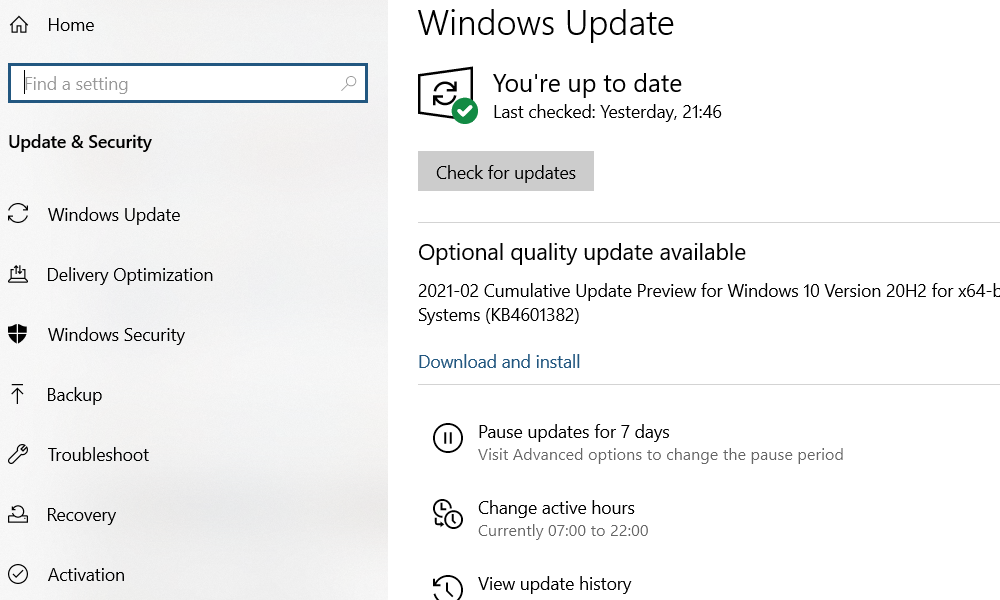
Updating your OS is one of the nearly important steps you can accept to ensure a robust and secure figurer. Unfortunately, it can lead to problems in dual booting scenarios.
Whereas a system update from your Linux distribution of choice should result in few bug, Windows Update can evidence devastating.
Running Windows Update can pb to the Master Boot Record (MBR) being rewritten, leaving you lot with a missing Linux sectionalization. Failed updates, or even simple commuter updates, tin can besides cause problems with a dual boot PC.
In this situation, it's time to resort to the tried and tested Windows ten recovery tools. Although time consuming, if y'all really need to run Windows, this is the style go information technology working once again.
For the all-time dual booting feel, ensure that your computer's boot order defaults to Windows, rather than your Linux OS.
ten. Using the Same App Twice Is Wasteful
More of a shortcoming of dual booting than a take chances, using the same software on 2 different operating systems is a waste of space.
While your storage space may be able to handle what is essentially a duplicate installation, in practice information technology actually makes no sense. Cloud sync software bated, in that location is no real need to run the aforementioned software on two operating systems on the same estimator.
If you're at that stage, information technology'south fourth dimension to decide which Os yous want to use full time.
Dual Booting Windows x and Linux Is Safe, With Precautions
It's extremely unlikely that you would be impacted by ALL these dual booting risks. However, at least one, perhaps two, are probable to occur at some signal. Just nothing hither should put you off dual booting. Ensuring your arrangement is set up correctly is important and tin can aid to mitigate or even avoid these issues. Backing upwards data on both partitions is wise, but this should exist a precaution you take anyway.
If you would nevertheless like to become back to a Windows-only setup, you lot tin can safely uninstall the Linux distro from a Windows dual-boot PC.
About The Writer


Source: https://www.makeuseof.com/tag/risks-dual-booting-windows-linux-operating-systems/
Posted by: gideongallembey.blogspot.com
0 Response to "How To Install Windows Operating System"
Post a Comment